

Sleep Tea for Bedtime: Herbal Infusions for Restful Nights
What does your bedtime routine look like? Do you have a healthy natural sleep cycle?
In the quiet hours of the evening, when the world slows down but your mind refuses to follow, a simple ritual can make all the difference. A calming practice that helps unwind before bed is a crucial method for signaling to your body and mind that it’s time to rest.
The act of brewing and sipping a warm cup of herbal tea for sleep and relaxation not only provides a moment of mindfulness but also harnesses time-tested botanicals to gently guide you into a deep, restorative slumber. This article explores the science of the best sleep tea for bedtime, diving into the key herbs that assist in combating sleeplessness naturally and can enhance your nightly wind-down.
Key Takeaways:
The best teas for better sleep are caffeine-free herbal tisanes, containing botanicals with nervine and mild sedative properties, such as Chamomile, Passionflower, Lemon Balm and Lavender.
These herbs contain active compounds that help calm the central nervous system, reduce the time it takes to fall asleep (sleep latency), and improve overall sleep quality by interacting with key neurotransmitters like GABA.
A herbal sleep tea is a gentle, non-habit-forming aid for mild to moderate difficulties. It is not a substitute for professional medical advice or treatment for chronic conditions like insomnia.
What do people mean when they say “sleep tea”?
The term “sleep tea,” along with phrases like “tea for sleeplessness” or “bedtime tea” generally refers to caffeine-free herbal infusions, formulated to encourage relaxation and facilitate better rest. They are usually crafted from a blend of botanicals with mild sedative qualities. For the most part the herbs contain active phytochemicals that interact with our neurochemistry to promote muscle relaxation, quiet mental chatter and support the body’s natural sleep-wake cycle, making them the ideal tea to drink before bed. The goal is to calm the mind and relax the body.

What kind of tea is good before bedtime? Key ingredients & how they work
Choosing the best bedtime tea involves understanding the science behind the ingredients. The ideal choice is a caffeine-free herbal infusion featuring botanicals that, in naturopathic practice, modulate neurotransmitters like GABA for calm or influence hormones like melatonin for rhythm regulation.
Below we listed some effective herbs, supported by research on their sleep-promoting effects.
Chamomile (Matricaria recutita): A staple in most sleeping teas. The quintessential soothing herb is traditionally used to combat insomnia and promote uninterrupted rest. (1, 2) Chamomile flowers contain the flavonoid apigenin, which binds to benzodiazepine receptors in the brain to produce a mild sedative effect and shorten the time to fall asleep. (3) A systematic review found chamomile significantly improves sleep quality, particularly in reducing awakenings and enhancing daytime function. Another trial in elderly participants showed notable gains in sleep parameters after regular use. (4)
It’s an excellent choice for those whose sleeplessness is linked to stress and its gentle action makes it suitable for nightly use.
Passionflower (Passiflora incarnata): Ideal for overactive minds. It contains flavonoids like vitexin, that contribute to deeper sleep phases, by boosting levels of the calming neurotransmitter GABA, which helps lower brain activity and prepare you for rest.
Systematic reviews highlight its efficacy for insomnia after consistent use. A double-blind trial found that participants who drank passionflower tea nightly for one week reported significantly better subjective sleep quality compared to a placebo group. (5, 6, 7)
Lavender (Lavandula angustifolia): Valued for its soothing aroma, lavender supports profound relaxation and better sleep architecture. Its active compounds, including linalool, exert a calming effect on the nervous system, elevating melatonin levels and extending slow-wave sleep. (8, 9)
Studies suggest that lavender reduces anxiety and helps settle the mind, making it easier to drift off naturally. A study on postpartum women drinking lavender tea reported improved sleep quality and reduced fatigue. Inhalation combined with oral ingestion has shown trends toward better wakefulness the next day. (10)
Lemon Balm (Melissa officinalis): This herb is a fragrant member of the mint family and traditionally used for alleviating restlessness and insomnia. Its rosmarinic acid inhibits GABA breakdown, prolonging calming effects. (11, 12)
Clinical trials indicate it reduces restlessness, with one pilot study showing relief from stress-related insomnia after 15 days. Another randomized trial confirmed its role in promoting restful sleep when combined with other herbs. Clinical studies have shown that lemon balm extracts can reduce cortisol levels, supporting the body’s natural wind-down process. (13, 14)
Lemon Verbena (Aloysia citrodora): It has a citrusy note and aids relaxation leading to improved rest, thanks to its phenylpropanoids. Its leaves are also rich in verbascoside, a polyphenol with sedative and anxiolytic actions.
Clinical trials have found lemon verbena extract to significantly reduce anxiety and enhance sleep. (15) Subjects experienced lower stress levels and reported sleeping better. In a randomized study, daily lemon verbena supplementation over several weeks increased melatonin levels at night, compared to placebo. (16)
Linden Flower (Tilia): Also known as Lime Blossom, Linden flowers have a long history of use in traditional European herbalism as a nervine to soothe tension and promote a sense of peaceful relaxation. The flowers contain active compounds like flavonoids and volatile oils that have been confirmed by pharmacological evaluations to have anxiolytic and mild sedative effects. It may influence GABA and serotonin for calm. A pilot study with melatonin noted improvements in mild insomnia.
Other Sleep-Promoting Herbs
In addition to the ingredients above, you may also find botanicals such as Valerian root or Rose Petals helpful for promoting sleep. In fact, valerian, a strong herbal sedative, is often described as “one of nature’s best relaxing herbs”. (17) Providing a floral gentleness in herbal tea for sleep, rose petals help mitigate stress that disrupts rest.
Each of these herbs contributes to a more restful night. A tea blend containing several of them provides a synergistic effect, amplifying GABAergic activity, melatonin support and cortisol reduction that can help the mind wind down and signal the body to get ready for bed. In summary, the best sleep teas combine these powerful botanicals.

Which OM herbal teas are best for sleep and relaxing?
At Organic Merchant, our certified organic blends are naturopathically formulated to harness the synergistic power of the herbs described above. Browse our Relaxation & Sleep Tea category to see all.
Restful Tea: Our premier tea for sleeping, this award-winning blend features Chamomile, Lemon Balm, Passionflower, Lemon Verbena and Lavender. Each ingredient is intentionally chosen for its proven ability to calm a busy mind and prepare the body for deep rest. If you struggle to switch off at night or experience frequent waking, this is the right choice for you.
Peaceful Tea: A wonderfully restorative tisane containing Chamomile, Lemon Balm, Linden Flower, Rose Petals and Lavender. This blend is perfect for de-stressing after a long day. Its ability to release physical and nervous tension makes it an excellent tea to drink before bed to create the calm conditions necessary for good sleep.
Chamomile Tea: Simple, pure and profoundly effective. A cup of our single-origin organic Chamomile flowers provides a classic, gentle sedative effect and is gentle on the stomach, which is why it also often recommended as a tea for managing symptoms of IBS. It’s an ideal starting point for anyone new to herbal infusions for sleep or for those who prefer a single, reliable ingredient to calm the nerves and encourage drowsiness.
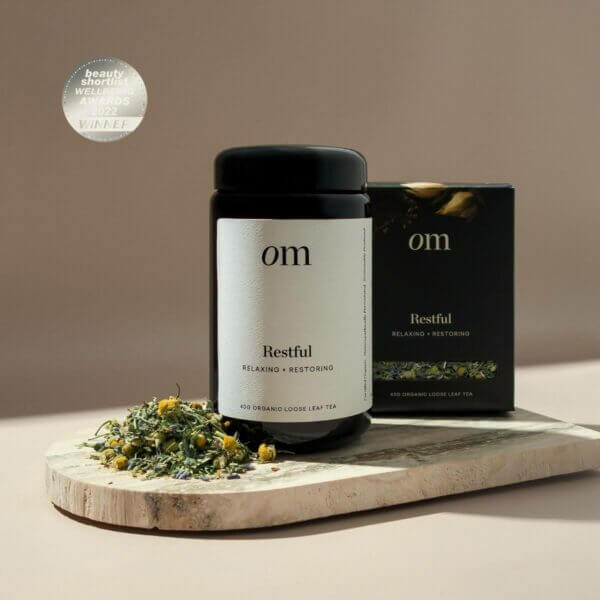
A restoring tisane imbued with calming chamomile, lemon and comforting lavender, for relaxing sleep.

An award-winning, restorative herbal tea offering a harmonious medley of precious petals with refreshing florals.
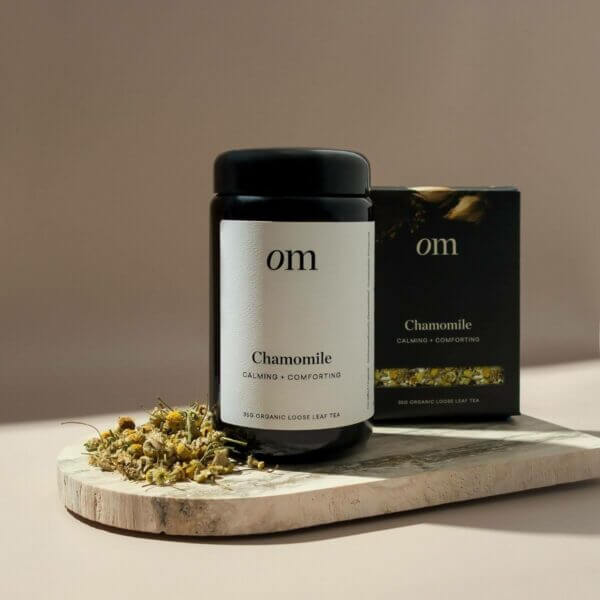
A pure certified organic chamomile tisane good for naturally soothing indigestion. Comforting and calming.

Get to know OM's award-winning mineral bath soak range with this gift set. Perfect for treating yourself.
What is the difference between teas for better sleep vs anxiety?
There is significant overlap in ingredients as both categories aim to calm the nervous system. However, teas for better sleep prioritize hypnotic elements to induce drowsiness, extend sleep duration and optimise cycles. Anxiety teas on the other hand lean on adaptogens for daytime stress modulation, cortisol balance and sustained calm without causing significant sedation.
For related insights explore our best tea for anxiety guide.
Effectiveness of teas compared to sleep medication
It’s important to have realistic expectations. Herbal sleep teas offer gentle, cumulative benefits for mild issues, contrasting with medications’ rapid but potentially dependency-forming action.
Below is a table showing pros and cons of both options:
Aspect | Herbal Teas | Pharmaceutical Sleep Aids |
Best For |
|
|
Mechanism |
|
|
Accessibility |
|
|
Effectiveness |
|
|
Possible Side Effects / Risks |
|
|
Limitations |
|
|
Can they work together?
Think of a sleep tea as a way to encourage your body’s innate ability to rest. They are a daily nurturance and a fundamental part of good sleep hygiene, often integrable. Medications are a stronger intervention reserved for clinical conditions and should always be used under the guidance of a healthcare professional. In some cases, under a doctor’s guidance, herbal teas can also be used to support a gradual reduction of medication dosage. However, this must never be attempted without professional supervision due to risks of interaction and withdrawal.
FAQ
The best tea to drink at night is a caffeine-free herbal blend containing well-researched nervine and sedative herbs like Chamomile, Passionflower or Lemon Balm. Our Restful Tea is an excellent example that combines several of these.
Generally yes, as these caffeine-free blends are non-habit-forming. For most gentle blends like those containing chamomile, lemon balm or linden, nightly use is considered safe and can even be beneficial as part of a consistent routine. Always listen to your body and moderate your use as you see fit.
While not a cure, sleep tea can be a valuable tool for managing jet lag. It can help reset rhythms by lowering cortisol and supporting melatonin, aiding recovery from travel disruptions. Drinking a cup an hour before your desired bedtime in the new time zone can help encourage your body’s circadian rhythm to adjust more quickly.
For optimal results, drink your night time tea about 30 to 60 minutes before you intend to go to sleep. This gives the active compounds time to be absorbed and for you to mindfully engage in your wind-down ritual.
Rare cases and minimal for most, such as mild stomach upset or rare allergies (e.g. chamomile in ragweed-sensitive). Please immediately discontinue if noticed.
Unlike many pharmaceutical options, a herbal sleep tea should not cause morning grogginess. Their action is much gentler and they are designed to support your natural sleep cycle, allowing you to wake up feeling refreshed. If you do feel groggy, you may be particularly sensitive and could try a smaller amount or steep it for less time.
Yes. While generally safe, some herbs can interact with medications in rare cases. For example, herbs with sedative properties could potentially amplify the effects of prescription sedatives, anti-anxiety drugs or alcohol. If you are taking any sleep medication for treating clinical cases, it is crucial to consult your healthcare provider before starting a new herbal regimen.
In general, yes. For example caffeine-free, mild options containing chamomile are considered safe for children in small amounts.
Our Restful or Chamomile Tea are generally considered safe in moderate amounts during pregnancy and breastfeeding. If in doubt, please consult your midwife or doctor. You can also explore our naturopathically formulated nursing and pregnancy tea collection.
Pair your tea ritual with other good sleep hygiene practices. For example you can turn off screens an hour before bed, ensure your room is dark and cool, and practice deep breathing or gentle stretching while you sip. The ritual itself is a powerful signal to your body that it’s time to rest. You can read more about it in our Sweet Slumber – advice for restful nights blog post.
Sources
Wheatley D. Medicinal plants for insomnia: A review of their pharmacology, efficacy and tolerability. J Psychopharmacol. 2005
Srivastava, J. K., Shankar, E., & Gupta, S. (2010). Chamomile: A herbal medicine of the past with a bright future. Molecular medicine reports, 3(6), 895–901. https://www.ncbi.nlm.nih.gov/pmc/articles/PMC2995283/
Chang, S. M., & Chen, C. H. (2016). Effects of an intervention with drinking chamomile tea on sleep quality and depression in sleep disturbed postnatal women: A randomized controlled trial. Journal of Advanced Nursing, 72(2), 306–315.
Sanchez-Ortuno MM, Belanger L, Ivers H, et al: The use of natural products for sleep: A common practice? Sleep Med. 2009
Toda K, Hitoe S, Takeda S, Shimizu N, Shimoda H. Passionflower Extract Induces High-amplitude Rhythms without Phase Shifts in the Expression of Several Circadian Clock Genes in Vitro and in Vivo. Int J Biomed Sci. 2017 Jun;13(2):84-92. PMID: 28824345; PMCID: PMC5542920.
Guerrero FA, Medina GM. Effect of a medicinal plant (Passiflora incarnata L) on sleep. Sleep Sci. 2017 Jul-Sep;10(3):96-100. doi: 10.5935/1984-0063.20170018. PMID: 29410738; PMCID: PMC5699852.
Ngan, A., & Conduit, R. (2011). A double-blind, placebo-controlled investigation of the effects of Passiflora incarnata (passionflower) herbal tea on subjective sleep quality. Phytotherapy research, 25(8), 1153–1159. https://doi.org/10.1002/ptr.3400
Kasper S, Gastpar M, Müller WE, Volz HP, Möller HJ, Dienel A, Schläfke S. Efficacy and safety of silexan, a new, orally administered lavender oil preparation, in subthreshold anxiety disorder – evidence from clinical trials. Wien Med Wochenschr. 2010 Dec;160(21-22):547-56. doi: 10.1007/s10354-010-0845-7. PMID: 21170695.
Koulivand PH, Khaleghi Ghadiri M, Gorji A. Lavender and the nervous system. Evid Based Complement Alternat Med. 2013;2013:681304. doi: 10.1155/2013/681304. Epub 2013 Mar 14. PMID: 23573142; PMCID: PMC3612440.
Li-Wei Chien, Su Li Cheng, Chi Feng Liu. The Effect of Lavender Aromatherapy on Autonomic Nervous System in Midlife Women with Insomnia. 2011. doi: 10.1155/2012/740813. Epub 2011 Aug 18.
Sanchez-Medina, A.; Etheridge, C.J.; Hawkes, G.E.; Hylands, P.J.; Pendry, B.A.; Hughes, M.J.; Corcoran, O. Comparison of rosmarinic acid content in commercial tinctures produced from fresh and dried lemon balm (Melissa officinalis). J. Pharm. Pharm. Sci. 2007, 10, 455–463.
Awad, R.; Levac, D.; Cybulska, P.; Merali, Z.; Trudeau, V.L.; Arnason, J.T. Effects of traditionally used anxiolytic botanicals on enzymes of the γ-aminobutyric acid (GABA) system. Can. J. Physiol. Pharmacol. 2007, 85, 933–942.
Mathews IM, Eastwood J, Lamport DJ, Cozannet RL, Fanca-Berthon P, Williams CM. Clinical Efficacy and Tolerability of Lemon Balm (Melissa officinalis L.) in Psychological Well-Being: A Review. Nutrients. 2024 Oct 18;16(20):3545. doi: 10.3390/nu16203545. PMID: 39458539; PMCID: PMC11510126.
Müller, S.F.; Klement, S. A combination of valerian and lemon balm is effective in the treatment of restlessness and dyssomnia in children. Phytomedicine 2006, 13, 383–387.
Martínez-Rodríguez, A.; Martínez-Olcina, M.; Mora, J.; Navarro, P.; Caturla, N.; Jones, J. Anxiolytic Effect and Improved Sleep Quality in Individuals Taking Lippia citriodora Extract. Nutrients 2022, 14, 218. https://doi.org/10.3390/nu14010218
Perez-Pinero, S., Munoz-Carillo, J. C., Echepare-Taberna, J., et al. (2024). Dietary Supplementation with an Extract of Aloysia citrodora (Lemon verbena) Improves Sleep Quality in Healthy Subjects: A Randomized Double-Blind Controlled Study. Nutrients. doi:10.3390/nu16101523
Stevinson C, Ernst E. Valerian for insomnia: a systematic review of randomized clinical trials. Sleep Med. 2000 Apr 1;1(2):91-99. doi: 10.1016/s1389-9457(99)00015-5. PMID: 10767649.