

How to support your energy levels in summer and through the festive season
For many of us summer is the time of year we feel most worn out. In Australia, summer, the festive season and the long school holidays all land at once, meaning heat, broken sleep and a packed calendar arrive together. This guide is about supporting your energy through that stretch with small, repeatable rituals rather than quick fixes. You will find what actually makes you tired in summer, what the evidence says helps and a simple day rhythm you can adapt for party days and school holidays.
Table of contents (click to jump):
Why do you feel more tired in summer?
You feel more tired in summer mostly because heat disrupts your sleep and puts your body under strain to stay cool. Add the fluid you lose on hot, active days and, in Australia, a festive season that lands in the same weeks, and your reserves run down faster than usual.
Sleep is the first casualty. Your core body temperature drops as you fall asleep, and when you are hot it usually takes longer to nod off and can be harder to get back to sleep once you wake (1). Humidity makes it worse. A review of human sleep and thermoregulation studies found that humid heat increases time spent awake and reduces both deep (slow-wave) sleep and REM sleep, partly because sweat cannot evaporate as it normally would to cool you. In those studies, heat-related sleep disruption did not adapt even after five days of continuous heat exposure, so do not expect to simply get used to a hot spell within a week (2).
When your body struggles to stay cool, heat exhaustion can set in. Its signs include weakness, headache, irritability and thirst, which are easy to mistake for ordinary tiredness (3). Strenuous exercise, especially in hot weather, is also one of the listed causes of dehydration (4), which we come back to below.
None of this means summer has to flatten you. It does mean the fixes that get you through a cold, busy month are not enough on their own.

Why does the festive season drain your energy?
The festive season drains your energy because it adds extra commitments, later nights, richer food and more alcohol. That is true wherever and whenever you celebrate. In Australia it simply arrives in the middle of summer, alongside the long school holidays.
Christmas burnout is not unheard of. Its signs include constant fatigue, irritability, trouble sleeping and wanting the holidays to just be over. Overcommitment, family tension, financial strain, social comparison and end-of-year deadlines at work or school are common drivers. Some practical suggestions include simplifying your plans, saying no when you need to, spreading shopping and preparation over several weeks, budgeting realistically, taking short breaks and limiting social media (5).
Late nights and drinks do their own damage. Alcohol may help you fall asleep, but it leaves your sleep fragmented, with more frequent waking and night sweats in the second half of the night and tiredness the next day. The Sleep Health Foundation suggests finishing alcohol at least 3 – 4 hours before bed and leaving two to three hours between your last main meal and going to bed (6). On a hot summer night those gaps matter even more. Alternating drinks with something alcohol-free, like a jug of iced tea with sparkling water, still puts something festive in your glass.
Then there is the energy that never shows up on a sleep tracker: the social kind. Back-to-back catch-ups, hosting and being “on” for family can leave you drained even after a full night’s sleep. The simplest protection is to treat recovery as part of the plan rather than a reward for getting through it. Put a quiet evening in the diary after every big event, the same way you would book the event itself.
If you have kids, the festive season and the school holidays usually arrive together, so your own downtime shrinks just as the demands grow. Share the load out loud rather than carrying it quietly: split the cooking, the wrapping and the driving, and agree as a family on which traditions actually matter this year. Then keep one small anchor for yourself each day. Like a cup of tea on the back step before the house wakes up or ten minutes alone after lunch, and protect it like an appointment.

The organic Iced Tea Gift Set includes our best selling iced tea cocktail infusion blends.

A restorative iced tea blend of vitalising citrus with a bouquet of soothing blossoms to uplift and restore.
Select Options This product has multiple variants. The options may be chosen on the product page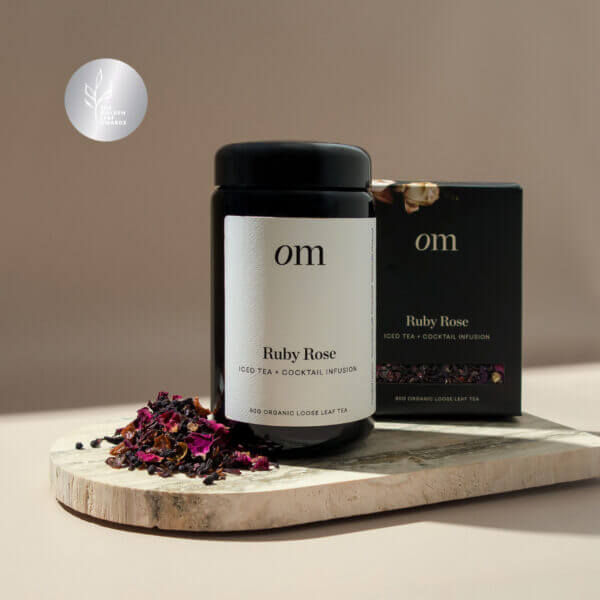
An award-winning vibrant iced tea blend featuring tangy berries and tart hibiscus, with sweet rose overtones.
Select Options This product has multiple variants. The options may be chosen on the product page
An award-winning iced tea blend combining crisp apple with comforting cinnamon and heart-warming rose.
Select Options This product has multiple variants. The options may be chosen on the product page
A multi-award-winning iced green tea boasting refreshing mint balanced with light revitalising grassy notes.
Select Options This product has multiple variants. The options may be chosen on the product page
An award-winning iced black tea infused with refreshing citrus tones and fragrant French florals.
Select Options This product has multiple variants. The options may be chosen on the product pageHow do you sleep well through hot nights and late parties?
To sleep well through hot nights, get heat away from your skin and keep your timing as steady as the season allows. Cool the room and your body before bed, keep alcohol and big meals well clear of bedtime and keep your usual wake-up time even after a late one.
Ideal sleeping temperature is at around 17 to 19°C. When you cannot get there, air flowing over your skin helps cool your body, whether it comes from a ceiling fan, a small fan by the bed or a breeze through an open window (1).
More hot-night tips:
Wear loose, light clothing in cotton rather than synthetics, and keep the sheet loosely draped.
Take a cool shower before bed, and another if you wake hot and cannot get back to sleep.
Stick your feet out from under the sheet. The temperature of your hands and feet matters when you are trying to cool down.
Wait until you actually feel sleepy rather than going to bed early, because it usually takes longer to fall asleep when you are hot.
Keep a light blanket nearby. Core body temperature reaches its low point around 3 to 5am, so you may feel cool later in the night.
Keep blinds or heavy curtains closed on hot days, drink plenty of water throughout the day and avoid sunburn, which affects sleep quality too.
If a caffeine-free cup is already part of your wind-down routine, it still belongs in a hot-weather evening. We recommend brewing it earlier and drinking it cooled down.
Late parties add a second problem: timing. Alcohol within three to four hours of bed and a heavy meal within two to three hours both work against settled sleep (6). If the night runs long, switch to water or an iced herbal tea for the last stretch. The next morning, get up somewhere near your usual time and top up with a short nap in the early afternoon rather than sleeping half the morning away.
If you have babies or young children, their sleep in the heat needs different handling. NSW Health advises cooling them with a damp cloth, face washer or lukewarm bath (never cold water), using fans to circulate air but keeping them out of reach and never pointed at the child and using a firm mattress without extra padding or bedding so air can circulate. Babies should not be left to sleep in a pram in hot weather because airflow is restricted, and a pram should never be covered with a dry wrap or blanket (7). Better nights for them usually mean better nights for you.

Does dehydration make you tired, and do you need electrolytes?
Yes, even mild dehydration can leave you feeling more tired, less alert and more tense, although its effect on thinking and memory is less consistent. For everyday summer hydration, water is the best drink. Oral rehydration solutions are for when you are actually dehydrated.
A critical review of hydration research found the evidence for mood changes with mild dehydration more consistent than the evidence for effects on thinking: people reported feeling less alert, more fatigued, more tense and less able to concentrate, sometimes with no change in how they performed on tests. Studies of mild dehydration had not shown a replicable effect on cognitive performance, while clearer deficits appeared with more severe dehydration (8). In other words, the flat, sluggish feeling can arrive before anything else does.
Healthdirect lists thirst, a dry mouth, headache, dizziness, dark urine and weeing less often among the signs of mild to moderate dehydration, and feeling irritable, tired or confused among the signs of more severe dehydration. Strenuous exercise in hot weather and drinking too much alcohol are among the causes. Water is the best drink to hydrate your body and oral rehydration solutions can help if you are dehydrated. Speak to a doctor before giving one to a child, or if you or your child has diabetes. While you are dehydrated, avoid sugary drinks, caffeine and alcohol. Older people may not notice they are thirsty, and babies, young children and older adults have a higher chance of becoming dehydrated, so offer them drinks rather than waiting to be asked (4).
So on an ordinary hot day, keep a water bottle within reach and sip before you feel parched. Save oral rehydration drinks for when you are actually dehydrated, for example after vomiting or diarrhoea or a hard workout in the heat, rather than making them a daily habit.
What about a hot cup of tea on a hot day? It sounds backwards, but a small study of nine young men cycling in a mild, dry room (about 24°C and 23% humidity) found that drinking water at 50°C led to less heat stored in the body than water at body temperature or colder, because it prompted more sweating and that sweat could evaporate. The researchers stressed that the result only applies when sweat can fully evaporate. When it cannot, as in humid conditions, they suggest colder fluids of around 10°C may better limit rising heat storage, although they did not test this (9). So on a dry day your morning cuppa is not working against you. On a sticky, humid one, a cold drink is the safer bet. If plain water bores you, a jug of cold-brewed, caffeine-free herbal tea in the fridge makes it easier to keep sipping. Read our guide about how to make iced tea.

How do you get through the afternoon slump?
The afternoon slump, roughly 2 to 4pm, is largely built into your body clock. The aim is to work with it rather than fight it with sugar. A short nap and well-timed caffeine are better bets.
Researchers describe the post-lunch dip as a mid-afternoon drop in alertness, between about 2 and 4pm, when the body clock’s daytime alertness signals are not strong enough to counteract building sleepiness. A high-carbohydrate lunch may make it worse, but the dip can occur even when people have had no lunch. In one lab study, sitting in ordinary office-level light rather than dim light reduced sleepiness, and blue-enriched or red-saturated light at the same brightness lowered brain-wave markers of drowsiness. None of the lighting conditions improved task performance or how alert people felt compared with normal white light (10). Getting out of a dim room is reasonable, but do not expect light alone to fix the slump.
The classic fix, something sweet, tends to backfire. A 2019 meta-analysis pooling 31 studies and 1,259 healthy adults found no positive effect of carbohydrates on mood at any point after eating them. People felt more fatigued in the first half hour and less alert in the half hour after that than when they had a placebo (11). Festive tables are full of exactly this kind of quick sugar, so it helps to know it is not the pick-me-up it feels like.
A short nap has better evidence behind it. In a study at Flinders University in Adelaide, 24 people who were good sleepers and not regular nappers had their night’s sleep cut to about five hours, then tried afternoon naps of 5, 10, 20 and 30 minutes. The 10-minute nap was the most effective overall. It improved every measure straight away, with some benefits lasting up to about two and a half hours. The 30-minute nap left people groggy and performing worse at first, an effect known as sleep inertia (12). It is one small study, but the practical lesson is simple: set an alarm, lie down somewhere cool and get up when it goes off.
Caffeine has its place, as long as you time it. The Sleep Health Foundation recommends avoiding caffeine for at least four hours before sleep and notes it can affect sleep even when consumed six hours beforehand, making it harder to fall asleep, reducing deep sleep and delaying your body clock (6). A 2023 meta-analysis of 24 controlled studies suggests an even wider margin: caffeine cut total sleep by about 45 minutes on average, and to avoid that loss the authors suggest finishing a standard coffee (about 107 mg of caffeine) at least 8.8 hours before bed. They note that individual responses vary (13). Food Standards Australia New Zealand lists no more than 400 mg of caffeine a day from all sources for adults, with a maximum of 200 mg in a single serving, and no more than 200 mg a day during pregnancy and breastfeeding (14).
In practice, your caffeinated cups, such as black tea or green tea, belong in the first half of the day. If you go to bed around 10pm, finishing caffeine by about 1pm keeps you outside the window that meta-analysis suggests for a coffee. After that, switch to caffeine-free infusions such as peppermint tea or rooibos.

A summer day rhythm: small rituals that hold your energy
A summer day rhythm is a handful of anchors you repeat every day, so your energy has something steady to come back to when the heat, the parties or the school holidays pull you off course. Keep the anchors and let everything else be flexible around them.
Time | Ordinary summer day | Party day | School holiday day with kids |
On waking | Glass of water, open up the cool side of the house | Same, and decide now when you will head home tonight | Ideally before the kids are up |
Morning | Your caffeinated cups, outdoor time before the heat builds | Same, and keep the day light | Outdoor play early while it is cool |
Lunch | A lighter lunch, water on the table, last caffeine by about 1pm | A lighter lunch, so dinner can be the big meal | Picnic in the shade, a water bottle for everyone |
2 to 4pm | A 10 to 20-minute nap or a short walk; caffeine-free from here | Nap if you can; caffeine-free from here | Quiet time for everyone, including you |
Early evening | Cold-brewed herbal tea, blinds closed against the sun | Alternate alcoholic drinks with water or iced tea | Lukewarm bath for little ones, cool shower for you |
Bedtime | Cool shower, fan on, feet out from under the sheet | Last alcohol 3 to 4 hours before bed, water by the bed | As close to the usual bedtime as you can manage |
A 10-minute reset for when the day gets away from you
Pour a cold infusion or put the kettle on, and drink a full glass of water while you wait.
Step outside or to a window for a few minutes of daylight.
Take ten slow breaths, letting each out longer than you breathed in.
Write down the one thing that still matters today and let the rest go.
Decide when tonight ends and tell someone.
FAQs
It can. Sweets and big, carbohydrate-heavy meals are more likely to leave you sleepy than energised in the hour or so afterwards. You do not need to skip the pudding. Enjoy it after a proper meal rather than reaching for sweets as an afternoon pick-me-up, and leave a couple of hours between a big dinner and bed.
If you cross time zones, switch to local meal and sleep times as soon as you can. Get daylight during the day but not close to bedtime and keep naps to 30 minutes or less for the first few days. Go easy on alcohol and drink plenty of water, especially on flights. On long road trips, plan your breaks before you feel tired.
Decide what you will make from scratch and buy or delegate the rest. Do as much as you can the day before, in the cooler morning hours. Give older kids real jobs, set up a shady drinks station with water and a jug of iced tea so guests help themselves and block out an hour after everyone leaves for nothing at all.
Start with a glass of water. The morning is the best time for caffeine, but it does not replace the water you need. Keep electrolyte or oral rehydration drinks for days when you are actually dehydrated rather than making them part of your daily routine.
Choose the events you really want to be at and give yourself permission to leave the rest early. Arrive with a departure time in mind and look for a quieter job at gatherings, like making the tea or walking the dog. Then keep the morning after a big night to yourself. Recovery time is not antisocial. It is what lets you turn up properly to the next one.
Yes. Christmas burnout is common and a dip after weeks of build-up, late nights and rich food is understandable. Ease back into routine with earlier nights, plenty of water, fresh food and time outdoors in the cooler parts of the day. If the low feeling lingers for weeks or starts to affect daily life, talk to your GP or a support service.
Whichever you will drink more of. On a dry, hot day a warm cup is not working against you. On humid days, when sweat struggles to evaporate, a cold drink is the safer bet.

Christmas Gifts: Sustainable and Eco-Friendly Ideas
Discover 9 sustainable Christmas gift ideas for everyone, from children and tea lovers to Secret [...]

How to make iced tea: 4 methods explained and compared
Making real homemade iced tea doesn’t take a complicated recipe. All you need is tea [...]

Breathwork: Relaxing + Invigorating Breathing
Breathwork is used to invigorate, energize and relax the body, mind and spirit. Relaxing breathwork [...]
Gluten Free Cheesecake: No-Bake Lavender and Coconut (Vegan, Dairy Free)
A creamy, no-bake gluten-free cheesecake made with cashews, coconut, lavender and lemon, finished with a [...]

Sleep Tea for Bedtime: Herbal Infusions for Restful Nights
Learn about the science of the best sleep tea for bedtime. Dive into the key [...]
References
Sleep Health Foundation (2024) Hot nights: how to help sleep.
Okamoto-Mizuno, K. and Mizuno, K. (2012) ‘Effects of thermal environment on sleep and circadian rhythm’, Journal of Physiological Anthropology, 31, 14.
NSW Health (2024) Heat-related illness.
healthdirect Australia (2026) Dehydration.
Beyond Blue (n.d.) Christmas burnout is common: here are a few ways to feel better.
Sleep Health Foundation (2025) Caffeine, food, alcohol, smoking and sleep.
NSW Health (2025) Babies and young children in hot weather.
Masento, N.A., Golightly, M., Field, D.T., Butler, L.T. and van Reekum, C.M. (2014) ‘Effects of hydration status on cognitive performance and mood’, British Journal of Nutrition, 111, pp. 1841-1852.
Bain, A.R., Lesperance, N.C. and Jay, O. (2012) ‘Body heat storage during physical activity is lower with hot fluid ingestion under conditions that permit full evaporation’, Acta Physiologica, 206(2), p. 98 onwards.
Askaripoor, T., Motamedzade, M., Golmohammadi, R., Farhadian, M., Babamiri, M. and Samavati, M. (2019) ‘Effects of light intervention on alertness and mental performance during the post-lunch dip: a multi-measure study’, Industrial Health, 57(4), pp. 511-524.
Mantantzis, K., Schlaghecken, F., Sunram-Lea, S.I. and Maylor, E.A. (2019) ‘Sugar rush or sugar crash? A meta-analysis of carbohydrate effects on mood’, Neuroscience and Biobehavioral Reviews, 101, pp. 45-67.
Brooks, A. and Lack, L. (2006) ‘A brief afternoon nap following nocturnal sleep restriction: which nap duration is most recuperative?’, Sleep, 29(6), pp. 831-840.
Gardiner, C., Weakley, J., Burke, L.M., Roach, G.D., Sargent, C., Maniar, N., Townshend, A. and Halson, S.L. (2023) ‘The effect of caffeine on subsequent sleep: a systematic review and meta-analysis’, Sleep Medicine Reviews, 69, 101764.
Food Standards Australia New Zealand (2025) Caffeine powders and high caffeine content foods.
Brooks, A.W., Schroeder, J., Risen, J.L., Gino, F., Galinsky, A.D., Norton, M.I. and Schweitzer, M.E. (2016) ‘Don’t stop believing: rituals improve performance by decreasing anxiety’, Organizational Behavior and Human Decision Processes, 137, pp. 71-85.