

Gluten Free Cheesecake: No-Bake Lavender and Coconut (Vegan, Dairy Free)
A no-bake gluten free cheesecake with a cashew and coconut filling on a pressed date and nut base, infused with lavender and finished with hibiscus or raspberry. No oven, no gluten free flour blend, no dairy. Ideally soak the cashews the night before and the rest is a blender and a fridge.
Soaking | Prep | Setting | Serves | Difficulty |
Overnight | 30 mins | 6 to 8 hrs fridge, or 3 hrs freezer | 10 to 12 | Easy |
In this article (click to jump):
Ingredients
Crust
275g fresh, organic pitted Medjool dates
80g raw organic walnuts
80g raw organic activated almonds
Pinch of salt
Filling
225g raw organic cashews, soaked overnight in cold water
120ml organic coconut milk, full fat
1 to 2 tbsp organic culinary lavender
Start with 1 tbsp for this amount of coconut milk. Lavender can quickly become overpowering, so taste before adding more. Add up to 2 tbsp for a stronger floral flavour.
50ml organic coconut oil, liquid
30g organic cocoa butter, liquid
2 organic ripe lemons, juice of both and zest of 1
2 tbsp organic maple syrup, or organic honey if nobody eating it is vegan.
Honey is an animal product and falls outside the Vegan Society’s definition of veganism, which excludes exploitation of animals and not only cruelty to them (1)
1 tsp organic vanilla extract
¼ tsp salt
Optional, for colour and tartness
1 tsp dried hibiscus flowers, or a small handful of organic raspberries
Extra lavender buds and raspberries to finish
Allergens. Contains cashews, almonds and walnuts. In Australia those are three separate declarable tree nut allergens, each named individually on a packaged food label rather than grouped under “tree nuts” (2). If you are making this for a crowd, say all three out loud. There is no swap that keeps the filling’s texture, so see the FAQs before you try.
Good to know: Every ingredient here is naturally gluten free, but they are packed in facilities that handle other things. A “may contain” or “may be present” statement is voluntary and is not regulated by the Food Standards Code, so its absence on a packet is not a guarantee (3). If someone with coeliac is eating, check the dates, nuts, coconut milk and vanilla extract, and if in doubt ask the manufacturer where the label is silent.
Equipment. You will need a 20cm springform tin (or something with a similar volume), a food processor for the crust and a blender for the filling. A high-powered blender is what gets the cashews properly smooth.
Different gluten free crust options for this cheesecake
Before we get to how to make the recipe, we will introduce 2 more alternative options for the crust. In a conventional cheesecake almost all of the gluten sits in the biscuit crumb crust. Change the crust and you have dealt with most of the problem, so this is the one decision worth making deliberately.
Crust | What it is | Texture | Vegan as usually made | Worth knowing |
Date and nut (this recipe) | Dates blitzed with walnuts and almonds | Dense, chewy, fudgy | Yes | Binds on the sugar and oil already in the fruit and nuts, so no butter and no baking |
Gluten free biscuit crumb | Crushed GF digestives or GF graham-style crackers with melted butter | Sandy, crisp, familiar | No, butter | Closest to a supermarket cheesecake. Swap to a firm plant-based block to keep it vegan |
Almond meal | Almond meal with fat and a little sweetener, usually baked | Short, crumbly, buttery | Depends on the fat used | Grain free, but it needs baking and cooling, which undoes the no-bake advantage |
For this cake the date base is not only the vegan-friendly choice, it is the better one. The chew of the dates against a very smooth cashew filling is most of what makes the slice interesting.

How to make the gluten free cheesecake
Ideally: Soak the cashews the night before. For the smoothest, creamiest filling, cover the cashews with cold water and soak them overnight in the fridge. This softens the cashews and makes them easier to blend. If your cheesecake filling comes out grainy, it is likely under-soaked cashews.
Short on time? Cover the cashews with freshly boiled water and soak for half an hour to one hour, then drain and rinse before using.
Line the tin. Line the base of a 20cm springform tin with baking paper. Lining the sides as well gives you a cleaner edge when you release it.
Blitz the dates. Process the pitted dates on their own until they break into small pieces and start clumping into a ball. Tip them out and set aside.
Make the crust. Process the walnuts, almonds and salt to a coarse meal, then add the dates back in and pulse until a loose dough forms. Squeeze a little between your fingers. It should hold. If that feels too dry, add a couple more dates. If it feels too sticky, add a spoonful of almond meal.
Press and chill. Press the crust firmly into the base of the tin. You can use the flat bottom of a small glass to compact it properly. A loosely pressed base is a base that crumbles when you slice. Put it in the fridge while you make the filling.
Infuse the coconut milk. Warm the coconut milk gently with the lavender, keeping it well under a simmer. Give it 5 minutes on the heat, then take it off and let it steep for 15 to 20 minutes. Strain out the lavender and taste the milk before you go further.
Blend the filling. Drain and rinse the cashews. Put them in the blender with the infused coconut milk, melted coconut oil, melted cocoa butter, lemon juice and zest, maple syrup, vanilla and salt. Blend for 2 to 3 minutes until completely smooth, scraping down the sides. If it will not come together, add lemon juice a teaspoon at a time rather than water or plant milk, which thin the set.
Optional two-tone. For the pink half, steep the hibiscus alongside the lavender, or blend a handful of raspberries into half the filling. Pour the two halves in side by side and drag a skewer through once.
Set it. Pour the filling over the chilled crust, smooth the top and cover. Park it in the fridge for 6 to 8 hours, or overnight, which is better. If you are short on time, 3 hours in the freezer are an alternative.
Serve. Release the tin while the cake is still cold. If frozen, take it out of the freezer 10 to 15 minutes before serving to soften slightly. Do not leave it at room temperature for longer than necessary.
Optional decoration: Scatter lavender buds and/or raspberries over the top and slice with a warm dry knife, wiping between cuts.

Troubleshooting
Why is my cheesecake filling grainy?
Most likely the cashews were not soaked long enough, or the blender is not strong enough to finish the job. Cashews ideally need a full overnight soak in cold water to soften to the point where they will go completely smooth. If you are already blending and it is still gritty, keep going for another minute or two, then add lemon juice a teaspoon at a time to help the blades catch.
If you are in a rush, cover the cashews with boiling water and leave them for up to 1 hour instead. Slightly less silky, still good.
Why has my cheesecake not set?
Either it has not had long enough, or the ratio of liquid to fat has drifted. This filling sets because the coconut oil and cocoa butter firm up when cold, so it needs a full 6 to 8 hours in the fridge to reach a sliceable texture. Overnight is better.
If you added extra coconut milk, water or plant milk to get the blender moving, you have diluted the fat that does the setting. A few hours in the freezer will usually rescue it.
Why is my crust falling apart when I slice it?
It was not pressed hard enough, or the date mixture was too dry. You might not be able to save it this time, but remember for when you make it next time: Use the flat base of a glass and lean on it, working from the centre outwards, until the surface looks compacted rather than loose. If the mixture feels sandy rather than tacky in the processor, blend in two or three more dates.
Why does it go soft on the table?
Because the set depends on fat, not on eggs or gelatine. A baked cheesecake holds its shape at room temperature in a way this one will not. Keep it in the fridge until the moment you serve, bring out one portion at a time on a hot day, and do not leave the whole cake sitting through a long lunch.
What to drink with it
Lemon, lavender and coconut want something aromatic rather than something heavy.
French Earl Grey is the natural partner, because it carries lavender alongside bergamot and picks up the same note in the cake rather than competing with it. Brew it lighter than usual so the tannin does not flatten the lemon.
For an evening slice, our caffeine free herbal blends sit more comfortably after dinner, and several are built on chamomile and lavender for the same reason this cake is. Chilled, Ruby Rose and Elderberry iced tea against a raspberry-swirled slice is the version to make in the Australian January heat.
If you would rather finish with something richer, a small cup of warm DUST cacao works well against the lemon, in the same way a squeeze of citrus works in dark chocolate.
Want to get inspired by more of our recipes? Try our nut free cacao bliss balls or gluten free chocolate self-saucing pudding.

An award-winning organic black tea infused with refreshing citrus tones and fragrant French florals.
Select Options This product has multiple variants. The options may be chosen on the product page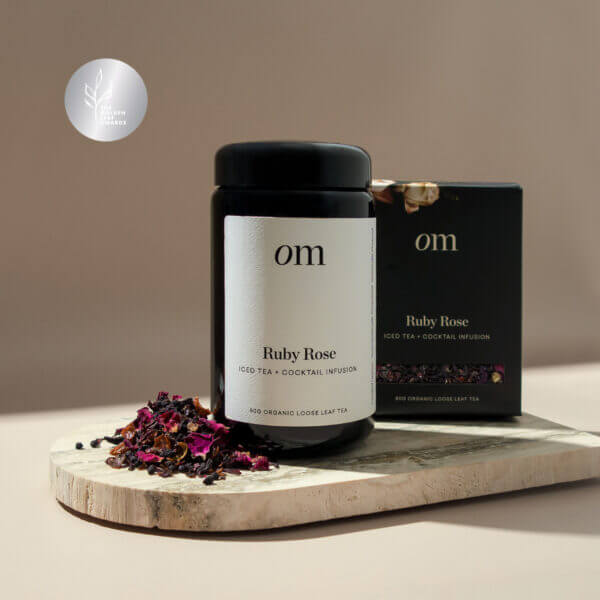
An award-winning vibrant iced tea blend featuring tangy berries and tart hibiscus, with sweet rose overtones.
Select Options This product has multiple variants. The options may be chosen on the product page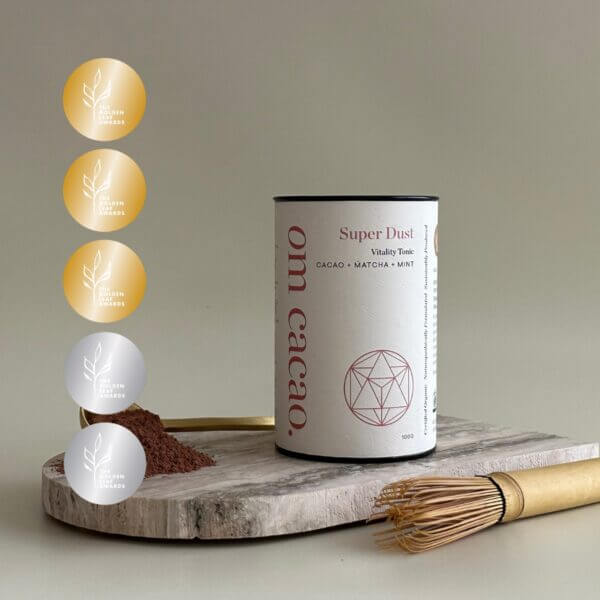
Matcha cacao blended with superherbs for natural energy and enhanced stamina.
Select Options This product has multiple variants. The options may be chosen on the product page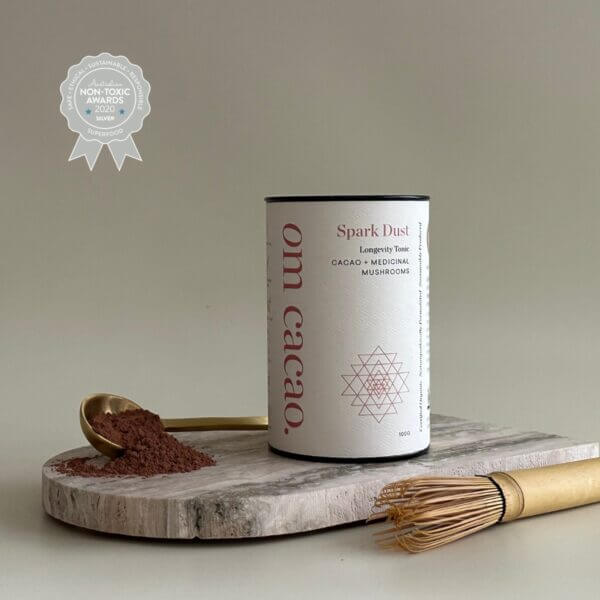
Raw cacao mixed with medicinal reishi mushroom powder for vitality and immune health.
Select Options This product has multiple variants. The options may be chosen on the product pageStorage, freezing and making it ahead
Fridge. Up to 5 days, covered. The lavender deepens on day 2, which is a good argument for making it the day before you need it.
Freezer. Up to 3 months. Freeze it whole and uncovered until firm, then wrap. Better still, slice it first and freeze the slices separated by baking paper so you can take out one at a time.
Thawing. Move a whole cake to the fridge overnight. Individual slices need 15 to 20 minutes at room temperature and are very good eaten semi-frozen.
For an event. Assemble up to 2 days ahead and keep it in the tin, in the fridge, undecorated. Release, decorate and slice on the day. Transport it cold in an esky, not on the back seat.
How much lavender is too much?
Lavender goes from floral to soapy faster than almost anything else in a dessert kitchen and a cheesecake has nowhere to hide it. Start with 1 tbsp for this quantity of coconut milk, taste the strained milk on its own, and only go to 2 tbsp if you want it unmistakably lavender. You can always infuse a second batch. You cannot take it back out.
Heat is the other half of it. Prolonged simmering pushes the infusion towards the bitter, resinous end of the flavour, which is where the soap note lives. Warming briefly and then steeping off the heat gives you the perfume without the edge, and it lets you stop the moment it tastes right rather than at a fixed time on a timer.
Buy lavender sold for culinary use. Ornamental lavender from a nursery or a craft shop has not been grown or handled as food.
Frequently asked questions
The crust, almost always. A standard cheesecake filling is cheese, sugar, eggs and cream, none of which are made from wheat, rye, barley or oats, so the gluten is concentrated in the biscuit crumb base. Deal with the base and you have dealt with the dessert. This recipe sidesteps biscuits entirely with a pressed date and nut crust.
Not with certainty, and Australia is stricter about this than most places. A gluten free claim on a packaged food here is only allowed when the food contains no detectable gluten, with no oats and no malted gluten-containing cereals, where the United States, the United Kingdom and the European Union all permit up to 20 parts per million. Testing detects down to roughly 3 to 5 parts per million, and no home kitchen can run that test. What you can control is the ingredients you buy and the boards, processors and benches you use.
Yes. The fat comes from coconut and cocoa butter, while cashews provide the creamy base. There are no eggs, gelatine or dairy ingredients. It is worth checking recipes carefully, as some cheesecakes labelled vegan may still use gelatine, which is derived from animal collagen.
The quantity in a slice is small, strained and spread across the whole cake, and it is there as flavour. It should be fine. However, European regulators have not established the safety of medicinal lavender preparations in pregnancy or breastfeeding, and do not recommend them for children under 12. So if you are concerned about it and would rather not weigh that up at a family lunch, make the hibiscus and raspberry version and leave the lavender out. It is very tasty that way as well.
You can, but manage your expectations on texture. In this case we recommend to really soak the cashews for a full 24 hours rather than overnight, blend in smaller batches so the blades stay submerged, and give it twice as long as you think it needs. A food processor alone gets you close but rarely all the way to silky. Pushing the finished filling through a fine sieve before it sets is tedious but effective.
Not this recipe. The cashews are the structure, not a flavouring, and there is no seed or legume that behaves the same way at the same ratio. Silken tofu and thick coconut cream both make a decent no-bake vegan cheesecake, but that is a different recipe with different quantities rather than a swap. For a nut free option, you can have a look at our nut free cacao bliss balls and the baked muesli bars recipe. Both are built for that.
Yes, and they are easier to serve than slices. Use a lined muffin tin or silicone moulds, press about a tablespoon of crust into each and top with filling. They set in roughly half the time, so start checking at 3 hours. They also release far more cleanly from silicone than from metal.
Slice straight from the fridge, not after it has been sitting out. Dip a thin knife in hot water, wipe it completely dry, cut in one downward motion without dragging, then repeat for every slice. Wiping between cuts is the step people skip and it is the one that makes the difference.
You can replace it with the same weight of extra coconut oil and it will still set. However, expect to lose a little firmness and some of the clean snap on the first bite, because cocoa butter stays solid at a slightly higher temperature than coconut oil does. On a hot day that difference is noticeable.
Ask two questions rather than one. What is the base made from, since that is where the gluten usually is, and how is it stored and cut, because a shared knife and a shared display cabinet will undo careful ingredients. Menu shorthand like “GF” is not regulated the way a packaged label is, so staff are a better source of an answer than the menu.
No. Coconut milk, coconut oil and the coconut flavour are all central to how it sets and how it tastes, and there is no direct substitute that holds together the same way.

Cacao bliss balls with figs (nut free, vegan)
Five-ingredient chocolate bliss balls made with figs, sunflower seeds and organic cacao. Naturally nut free, [...]

Homemade Muesli Bar Recipe with Cacao (baked, nut free)
A baked homemade muesli bar recipe with cacao, rolled oats, seeds and sultanas. Nut free [...]

Chocolate Self-Saucing Pudding Recipe (Gluten Free & Egg Free)
Our chocolate self-saucing pudding is gluten free and egg free. As it bakes, the pudding [...]
References
The Vegan Society. The honey industry. Position statement of the organisation that defined veganism.
Food Standards Australia New Zealand. Food allergies and intolerances. Regulator guidance, last updated 26 November 2025.
SA Health, Government of South Australia. Gluten-free claims in packaged foods. Government guidance on Standard 1.2.7 and Schedule 4 of the Food Standards Code, last updated 1 October 2024.